An adventure trip that looks simple on a website can quietly fall apart over a single missing stamp on a permit form. Operators running expeditions across borders have learned that the hardest part of the job often has nothing to do with terrain, and everything to do with paperwork written in a language nobody on the ground fully understands.
Why permits are the quiet bottleneck of adventure travel
Trekking permits, park entry forms, and customs declarations for specialized gear often arrive in the local language of the country an expedition is passing through, with legal phrasing that doesn't translate cleanly into everyday English. A small operator running trips through multiple countries in a single season can end up juggling permit paperwork in four or five languages at once.
Misreading a single clause, especially around group size limits or protected zone boundaries, can turn a routine border crossing into a multi-day delay that ripples through an entire season's booking schedule.
Coordinating multilingual teams without losing anyone in translation
Adventure operators increasingly run teams that mix local guides, international staff, and rotating seasonal hires, all of whom need consistent access to the same safety protocols and route documentation regardless of their first language. Companies that rely on ad hoc translation, a bilingual staffer here, a phone app there, eventually run into a moment where a safety-critical instruction gets garbled at the worst possible time.
Operators that adopt a structured translation management system keep every version of a safety briefing or route document synchronized, so an update made in one language automatically flags every other version as needing review, rather than quietly going out of date in three languages while only one gets updated.
Handling the surge of Russian-speaking adventure travelers
Russian-speaking clients have become a significant and growing segment for adventure operators running trips through mountainous and remote regions, often booking through agents who expect detailed itinerary documents in their own language. Operators working with professional russian translation services report far smoother pre-trip communication, particularly around medical disclosure forms where a translation error carries real safety implications.
Why Ukrainian-speaking clients need a different kind of preparation
Adventure travel bookings from Ukrainian-speaking clients have grown steadily, often involving groups that want extensive documentation translated before committing to a deposit, given the practical realities many are navigating. Agencies that maintain a relationship with reliable providers of ukrainian to english translation can turn around detailed itinerary and liability documents quickly, rather than losing bookings to competitors who respond faster.
What happens when permit translation goes wrong
Some smaller operators try to save money by having a guide informally paraphrase permit conditions for the group rather than commissioning a proper translation. This works until a ranger or border official asks a specific question about a clause nobody actually read carefully, at which point the entire group can be held up while someone scrambles to find an accurate answer.
Adventure operators fighting over permit paperwork are dealing with a regulated access problem. Companies entering the space industry navigate a far larger version of the same licensing maze before they ever fly. Access, not ambition, is usually the binding constraint.
Permit disputes tend to hinge on documents drafted in one language and enforced in another. Operators working across borders now commission certified document translation for licences, insurance schedules and liability waivers so that a regulator and an insurer are reading the same thing. The paperwork is where the commercial risk actually sits.
In more serious cases, a misunderstood restriction on protected wildlife zones or fragile terrain has led to fines that fall directly on the operator, not just the individual traveler who technically broke the rule. Guidance from bodies such as the UN World Tourism Organization increasingly emphasizes that clear documentation across languages is a core part of responsible tourism management, not a secondary administrative detail.
How established operators now structure their documentation process
Larger adventure travel companies increasingly treat permit and safety document translation as a pre-season task handled well before bookings open, rather than something scrambled together as each trip approaches. This gives translators enough time to work through dense legal or bureaucratic language properly instead of rushing a same-week turnaround.
These companies also build a standing glossary of route names, permit categories, and safety terminology for each region they operate in, which keeps translations consistent across guides and prevents the same clause from being interpreted three different ways by three different staff members.
A case study from a multi-country trekking operator
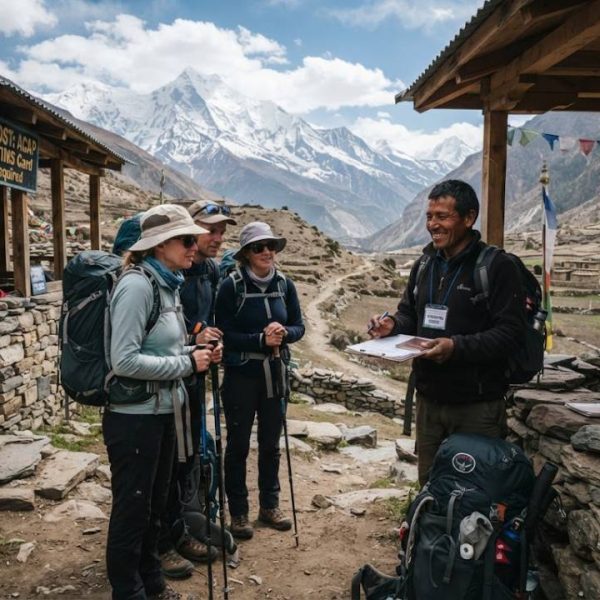
A mid-sized trekking company running routes across several mountain regions once had an entire group turned back at a checkpoint because their permit paperwork, translated informally by a guide, was missing a required addendum that existed only in the original language version. After switching to professional translation for every permit package, the same company has run three full seasons without a single checkpoint delay tied to documentation.
What this means for the future of cross-border adventure travel
As adventure tourism continues expanding into more remote and bureaucratically complex regions, the operators who treat translation as core operational infrastructure, rather than an afterthought, are the ones who keep their seasons running smoothly. The ones who don't usually find out the hard way, standing at a checkpoint with a group of frustrated travelers and a permit nobody can quite explain.